Category Archives: Articles

What Europe Should Learn From Bosnia

The World Post – The Huffington Post

By Akbar Ahmed
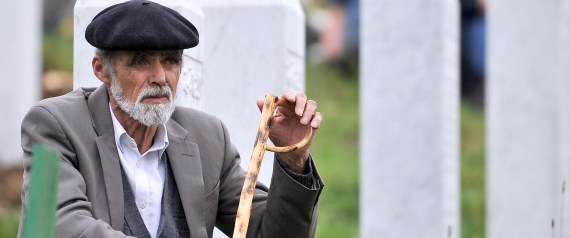
BOSNIA-WAR-SREBRENICA-ANNIVERSARY

Europe today is witnessing a major crisis concerning its Muslim communities, one which is already beginning to reveal its troubling global implications. I believe Europeans have much to learn from tiny Bosnia, tucked away in a remote part of the continent. Let me explain.

Europeans feel under siege. Wherever they look, they are confronted with appalling stories of violence and moral turpitude associated with Muslims — the Charlie Hebdo killings in Paris followed by the attacks in Copenhagen; Muslims assaulting members of the Jewish community in schools, museums and even markets; and Muslims in the U.K. are condemned for both “grooming,” that is, exploiting young girls for sex by getting them addicted to drugs and drinks and “Trojan Horse” strategies designed to take over schools and impose an Islamic agenda.

In turn, Muslims also feel under siege. Right-wing parties have grown dramatically with a negative focus on Muslims and contest most Muslim-related issues, including, for example, that of rescuing immigrants at sea, which they depict as opening the floodgates to “millions” of potential terrorists. Huge processions numbering up to 25,000 have been organized by Pegida against Muslims. (To her credit, Mrs. Merkel, the chancellor of Germany, spoke at an anti-Pegida rally organized by Muslims in Berlin). Women in hijabs and mosques, both seen as symbols of Islam, have been frequently attacked. Three mosques were targeted in rapid succession even in traditionally peaceful Sweden. As a consequence of the negative reports about them, Muslims tend to see media as one-sided and biased.

In the midst of this ugly confrontation what can Bosnia teach us?

To continue reading, click here.
“To Combat the ‘New Anti-Semitism,’ Europe’s Jews and Muslims Must Work Together”

The World PostThe Huffington Post

By Harrison Akins

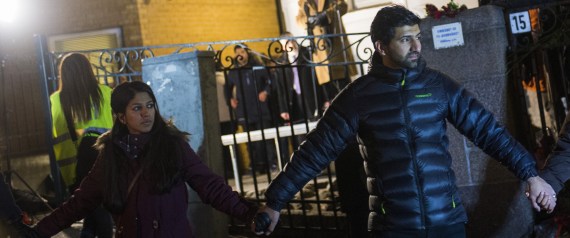
NORWAY-DENMARK-ATTACKS-ISLAM-JUDAISM

With news reports of continued anti-Semitic attacks against the Jewish community in Europe, it is all too easy to fall into a pessimistic view of the future of Jews’ place there. Some are asking the question of whether or not Jews should be leaving for safer shores. Israeli Prime Minister Benjamin Netanyahu has even made appeals to European Jews to immigrate to Israel.

The blight of anti-Semitism has haunted Europe for over a millennium and is still evident today. Recently, a new manifestation of anti-Semitism has arisen from within the Muslim population in Europe, a population that both dwarfs the Jewish community and continues to grow.

There is no denying the serious problems that exist between the Jews and Muslims of Europe. But do negative reports of those relations paint the whole picture?

Over the past two years, I have been traveling as part of the research team of Ambassador Akbar Ahmed, the chair of Islamic studies at American University, on a book and film project called “Journey into Europe.” We have been studying Islam in Europe, broadly speaking, and an important aspect of the project has been examining the relations between Jews and Muslims.

To continue reading, click here.
What Andalusia Can Teach Us “Today About Muslims and Non-Muslims Living Together”

Huffington Post – The World Post

By Akbar Ahmed

SPAIN-RELIGION-ISLAM-CHRISTIANITY-CULTURE

“The loss of Andalusia is like losing part of my body,” H.R.H. Prince Turki al-Faisal told me.

I had asked him what the loss of Andalusia meant to him as an Arab. The son of King Faisal, widely celebrated in the Muslim world, Prince Turki heads The King Faisal Center for Research and Islamic Studies in Riyadh, Saudi Arabia’s preeminent think tank, and has been Saudi ambassador to the U.S. and the U.K. The question had excited the normally taciturn prince. The mask of cultural and royal impassivity developed over a lifetime of diplomatic dealings had dropped as his body and voice expressed high emotion. The image of Andalusia had struck a nerve: “The emptiness remains.”

When I asked him what Andalusia meant to him, he replied, “I have a passion for Andalusia because it contributed not only to Muslims but to humanity and human understanding. It contributed to the well-being of society, to its social harmony. This is missing nowadays.” For the prince, “Andalusia was the exact opposite of Europe at that time — [then] a dark, savage land of bigotry and hatred.”

At its height, Andalusia produced a magnificent Muslim civilization — religious tolerance, poetry, music, learned scientists and scholars like Averroës, great libraries (the main library at Cordoba alone had 400,000 books), public baths, and splendid architecture (like the palace complex at the Alhambra and the Grand Mosque of Cordoba). These great achievements were the result of collaboration between Muslims, Christians and Jews — indeed the work of the great Jewish Rabbi Maimonides was written in the Arabic language. It was a time when a Muslim ruler had a Jewish chief minister and a Catholic archbishop as his foreign minister. The Spanish had a phrase for that period of history — La Convivencia, or co-existence…

To continue reading, click here.

Ambassador Ahmed presents “Islam in Europe” fieldwork at American University

JIELecture

by Patrick Burnett

The American University (AU) community, His Excellency the Ambassador of Iraq to the United States, prominent Pakistani officials, friends, and supporters came together February 10 to hear Ambassador Akbar Ahmed’s findings from the field in the Journey Into Europe project.

Ambassador Ahmed, the Ibn Khaldun Chair of Islamic Studies at AU and the former Pakistani High Commissioner to the U.K., reported on findings from his extensive fieldwork in Europe over the past two years, coming off the heels of a final leg of research in Denmark, France, and Italy during the winter.

Distinguished guests of this important lecture included Ambassador Lukman Faily, Iraqi Ambassador to the U.S., and his wife, Mrs. Fally, Brigadier Chaudhary Sarfraz Ali, Defense and Army Attache of the Pakistan Embassy in Washington, Pakistani Senator Akbar Khwaja, Dean Louis Goodman, Dean Emeritus of SIS, Ann Kerwin, wife of AU President Cornelius Kerwin, Brooke Beardslee, president of the SOAS Alumni Association of America, and Paul Smith, director of the British Council U.S.A. Dear friend of the project Begum Kosar, who hosted a dinner for the Journey Into Europe team in her home in McLean, Va. in March 2014 to launch the project, also attended the lecture with her grandson…

To Continue Reading, Click Here.

“Stranger in Copenhagen” – The Friday Times

By Amineh Hoti

tft-49-p-1-e

Denmark, proclaimed the “happiest country in the world”, is known for its social mobility, transparency and progress, with the highest ranking in the world despite its population of a little more than 5 million people. Its capital Copenhagen aims to become the world’s first carbon-neutral capital by 2025. Its true acclaims lie in being a city where you can borrow books from the library free for a month; where the Queen is like an ordinary person and goes about the city on a cycle; where there is very little “VIP culture”, and schools and hospitals are free. There is a lot to learn here as Pakistanis, but as anthropologists not tourists. Digging deeper under the skin, we have found that there is also another story – that of immigrants’, mainly Pakistani, to Denmark.

Recently, Denmark became known in the world, especially to Muslims, for its cartoon controversy – negative cartoons of the Prophet (PBUH) were published widely, causing protest and fury. Denmark has a widely cited code of behaviour called “Jaunteloven” which sits uneasily with the immigrants’ own needs and identity. Its law No 9 states, “You’re not to think anyone cares about you”- this cultural law has implications for both the Christian majority and the Muslim minorities as both religions emphasize love and care for the other. The stories of Muslims in Denmark (who are at the heart of controversy in its media and popular imagination) is worth exploring in order to find paths to peace in the world.

It is this that brought the “Journey into Europe” team led by my father, Professor Akbar S Ahmed to travel here from different parts of the world. Similar to our previous excursions last summer to the UK, Spain, Germany, Bosnia and Greece to look at minorities, especially Muslims, in Europe and to explore how we can build bridges between different communities and give voice to so many different people who are otherwise not heard. Professor Ahmed flew from DC with his trusted and well-travelled team: Zeenat Ahmed, Frankie Martin and Harrison Akins. I left my home in Pakistan at 2am through the dark and cold path that the bus took to the airport. I deeply feel the pain of what my fellow-people are going through, with all the unease and turmoil they face on a day-to-day basis, and as we flew off from South Asia, I prayed for peace and deeper understanding in the region and in our world…

To continue reading, click here.

“Why Right Now Is a Crucial Time for Islam in Europe”

By Akbar Ahmed

The World Post – Huffington Post

FRANCE-ATTACKS-MEDIA

The sense of absolute horror at the terrible tragedy that took place in Paris has not yet abated. The enormity of what happened — an attack on the foundations of the idea and practice of a free press — is unprecedented. France grieves and so should all right-thinking people who value democracy and human rights. We commiserate with the families who have suffered such tragic loss.

The president of France, Francois Hollande and his political rival and former president, Nicolas Sarkozy, appeared together in a show of unity to condemn what had happened in the strongest words. They faithfully reflected the defiance, anger and shock that the nation felt. World leaders from President Obama to the prime minister of the U.K. rallied around in a show of solidarity with France, vowing to stand by it.

Both Hollande and Sarkozy cast the attacks in Paris in terms of the Huntingtonian thesis of the clash of civilizations between the West and Islam. Hollande condemned the “exceptional barbarism” and Sarkozy declared this to be a “barbaric” attack on civilization itself. It was “a war on civilization,” said Sarkozy. Implicit in such statements was Huntington’s idea of the clash…

To continue reading, click here.


Why Are European Muslims Joining ISIS? – Huffington Post

By Akbar Ahmed

The numbers are alarming. The Metropolitan Police Commissioner in London recently said that five British citizens are joining ISIS every week, swelling the ranks of European Muslims believed to number in the thousands.

Despite blanket coverage in the media, the question of why still remains a mystery. Most assessments focus on the role of “jihadist” ideology and “radicalization” in motivating these recruits. These tend to simplify and reduce the complex factors that affect the European Muslim communities, internally and externally. I have repeatedly and publicly condemned the heinous acts of ISIS, but, in order to defeat terrorism, it is imperative we understand the underlying factors motivating European Muslims who support it…

To continue reading, click here.

“Journey into Europe” by Ali Imran in Pakistan Today

An eastern scholar’s study of Muslims in west

Europe is home to around 50 million Muslims. But, has it culturally been a homeland to the minority community in the post-9/11 world, where sweeping generalisations and insouciant policies fuel a string of new societal, political and intellectual challenges?

Similarly, are the Muslims, who have benefited from the European economic opportunity and creative freedom, integrating into the mainstream systems, and rising to the occasion in terms of an intellectual discourse towards a multicultural peaceful coexistence?

How will the rise of ISIS militancy, which has drawn thousands of Europeans into Syria and Iraq, and the new US-led NATO fight against militants in yet another Muslim country sharpen perceptions on both sides? And what are the best ways to promote better understanding and relations between different religions and communities in today’s Europe?

These are some of the thoughts that underpin the quest of a forthcoming book by Dr Akbar Ahmed, Ibn Khaldun Chair of Islamic Studies at Washington’s American University…

To continue reading, click here.

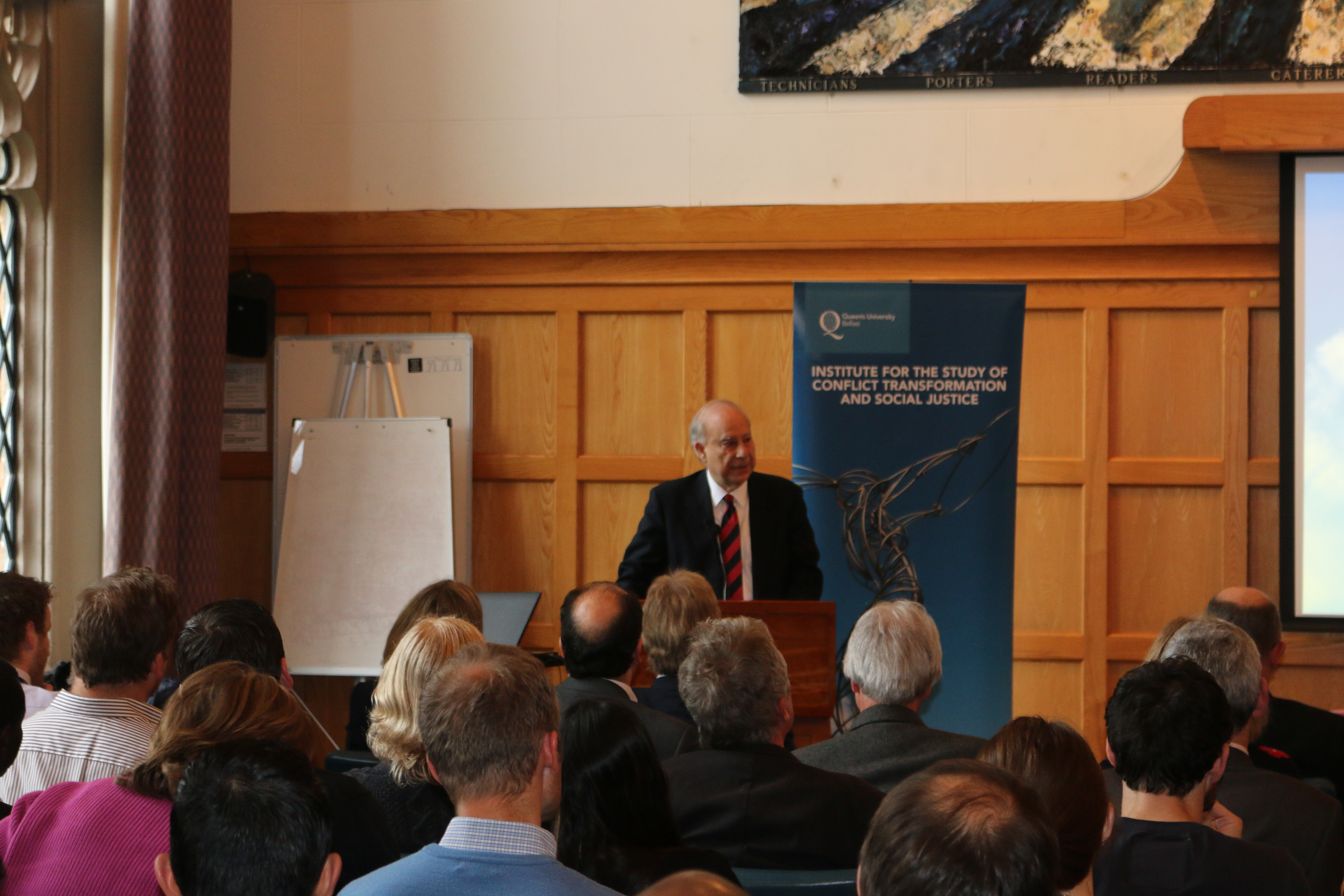
Islam and Dialogue in Northern Ireland

By Harrison Akins

Belfast lecture twoBelfast lecture one

As the sun shone brightly as our plane touched down in Belfast after arriving from Edinburgh, I had no idea of the storm we were landing in.

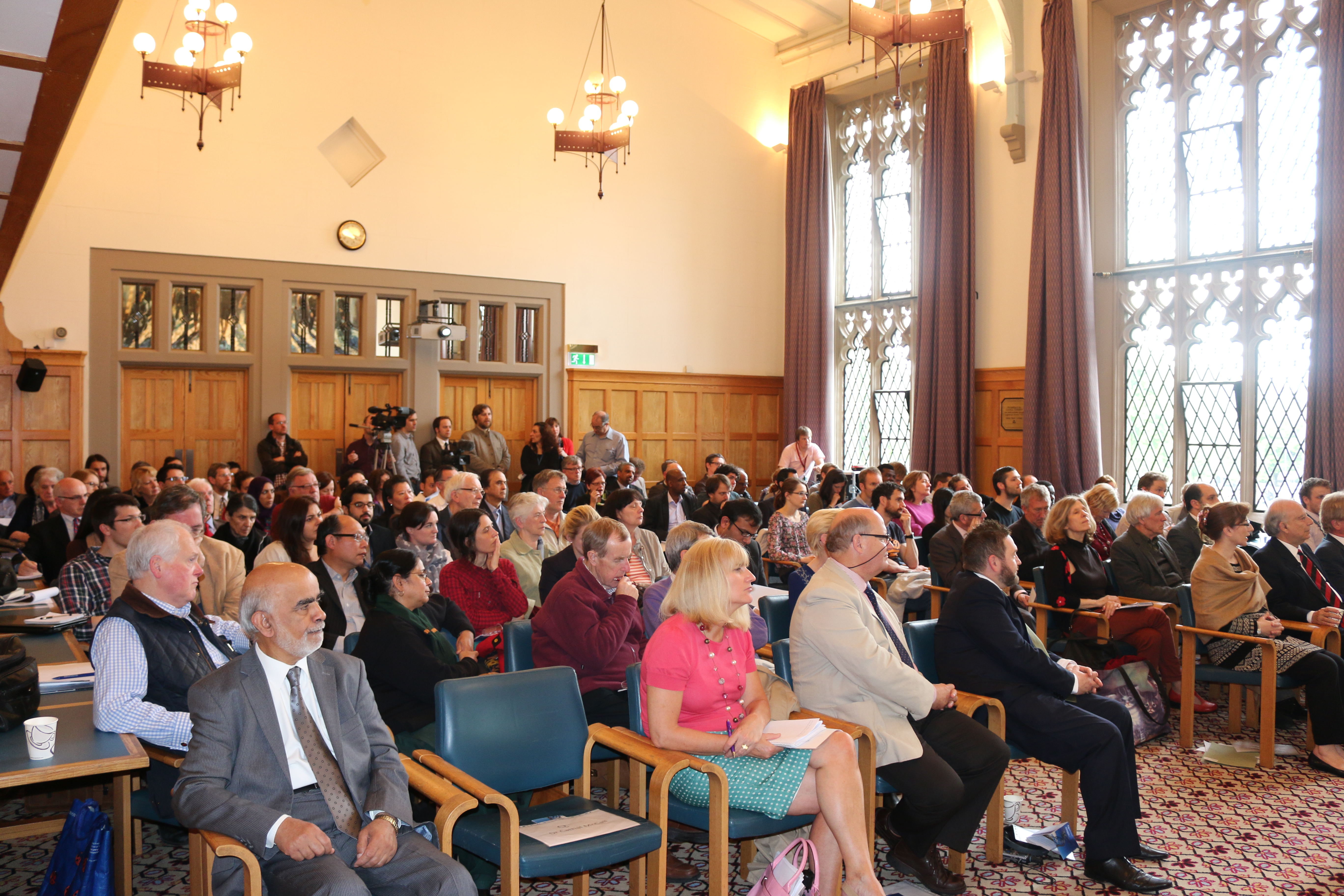
I was traveling with my professor, Ambassador Akbar Ahmed, the Ibn Khaldun Chair of Islamic Studies at American University and the former Pakistani High Commissioner to the UK and Ireland, on a new study, Journey into Europe, examining Islam in Europe in collaboration with our UK partner the Muslims, Trust and Cultural Dialogue project. We were arriving in Belfast for Ambassador Ahmed to give the 2nd Annual Harri Holkeri Lecture at Queen’s University Belfast on May 29, hosted by the Institute of the Study of Conflict Transformation and Social Justice and its director Professor Hastings Donnan.

I was coming to Belfast for the first time aware of the problems this region had faced during the Troubles but largely unaware of the new challenges emerging in regards to the Muslim and immigrant communities. Just days before arriving in Northern Ireland, a local pastor named James McConnell had announced from his pulpit at the Metropolitan Tabernacle that the religion of Islam was “satanic” and stated that Muslims were “heathens” and he did not trust them. A statement of support by Northern Ireland’s First Minister Peter Robinson stoked the controversy around Pastor McConnell’s statements further. Having only been in Belfast for a matter of hours, Ambassador Ahmed was inundated with interview requests from BBC’s Good Morning Ulster, BBC Northern Ireland television, and UTV. For a region which has experienced such horrific violence in its history, these statements only serve as reminders of wounds still healing, wounds which lie upon religious lines.

These comments demonstrated the unfamiliarity, fear, and mistrust which is too often associated with the Muslim community in the United Kingdom…

To continue reading at The American Muslim, click here.

A Tennessean at the House of Lords

By Harrison Akins

Here I was, an American from a small mountain town in east Tennessee, sitting at the heart of the most British of institutions—the Royal Gallery of the House of Lords in the Palace of Westminster. Chatting amicably with our host, the distinguished scholar Lord Bhiku Parekh, my gaze kept drifting upwards to the towering portraiture of the past kings and queens of Britain and the painted iconic vistas of Lord Nelson’s death at the Battle of Trafalgar and the British victory over Napoleon at Waterloo that lined the gilded walls. The vast room weighed heavy with the grandeur of royalty and empire. I felt quite small sitting quietly in the shadow of history’s great figures and moments.

I was in the Royal Gallery of the House of Lords a few days ago accompanying my professor Ambassador Akbar Ahmed, the Ibn Khaldun Chair of Islamic Studies at American University in Washington, DC and the former Pakistani High Commissioner to the UK, as we waited to participate in the launch of his latest project, Journey into Europe: Islam, Immigration, and Empire which will take our research team across the continent of Europe studying Islam, the diverse Muslim communities, and European identity. We will be investigating the contemporary challenges of the Muslim community in the context of history, looking at the controversial issues associated with Islam—terrorism, sharia, the building of mosques, female dress, and immigration. The Journey into Europe project is the fourth book in a series of studies by Ambassador Ahmed examining the relationship between the West and the World of Islam after 9/11: Journey into Islam (2007), Journey into America (2010), and The Thistle and the Drone (2013).

On the evening of the launch, our team gathered under the raised sword of Richard the Lionheart astride his stone horse in front of Parliament and, upon entering through the Peers’ Entrance, was greeted with smiles and hugs by Lord Parekh.

The standing room only event, held in a House of Lords Committee room overlooking the Thames River on a sunny English day, was filled with leading lords, diplomats, academics, philanthropists, and religious leaders such as senior representatives from the Pakistani High Commission, Dr. Richard Stone, one of the most important Jewish leaders and pioneers of interfaith dialogue in Britain and a philanthropist, Malise Ruthven, the well known author of books on Islam, the noted nationalism scholar Dr. John Hutchinson of the LSE, Mohsin Akhtar, the largest Asian land lord in the UK, Dr. Muhammad Abdul Bari of the Muslim Council of Britain, and Dr. Jafer Qureshi of Muslim Aid, UK.

To continue reading at the American Muslim, click here…